
Bonhoeffer and Believing in Wrong Things
is virtue a selfish act when it comes at the expense of others?

“We do believe in all sorts of things, far too many things in fact. We believe in power, we believe in ourselves and in other people, we believe in humankind. We believe in our own people (Volk) and in our religious community, we believe in new ideas — but in the midst of all those things, we do not believe in the One — in God. An believing in God would take away our faith in all the other powers, make it impossible to believe in them. If you believe in God, you don’t believe in anything else in this world, because you know it will all break down and pass away. But you don’t need to believe in anything “else,” because then you have the One who is the source of all things, in whose hands everything comes to rest.” (DBWE 13: 405-6)
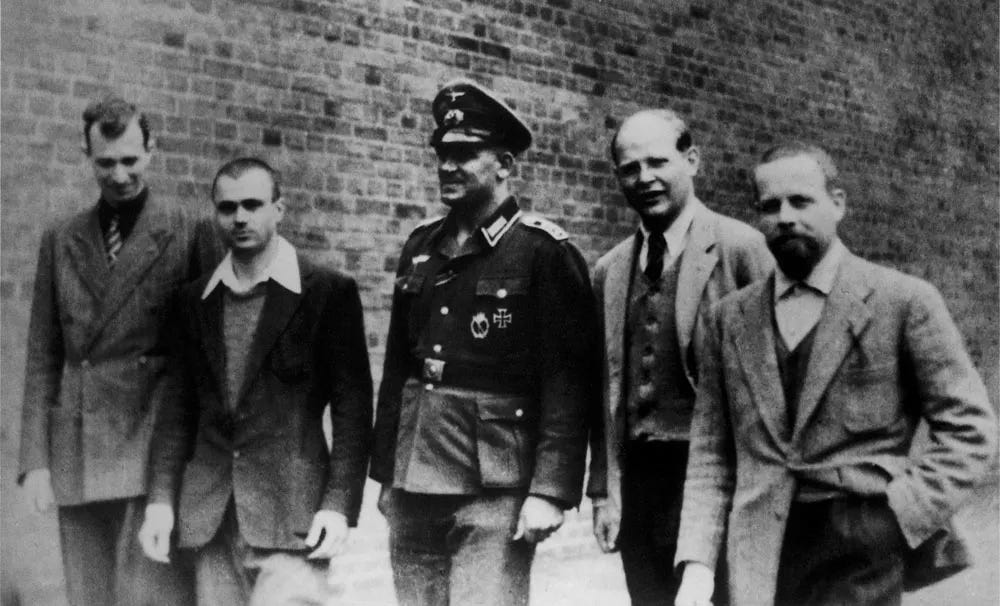
In his sermon about Mark 9:14-29 (the father of the boy possessed by an unclean spirit), Bonhoeffer writes about belief in G-d. In this passage Jesus tells the father who asked Jesus to heal his son if He was able, “all things are possible for those who believe,” and the father cries “I believe! Help my unbelief!” Faith demands obedience and this will necessarily change one’s life. Obedience comes naturally from belief in Christ, and Jesus never promised us Christian life would come with ease. The Christian leaders who chose the Reichskirche chose cheap grace. Bonhoeffer chose costly grace.
A certain turmoil casts a shadow on Bonhoeffer’s life as the Nazis rise to power.
What fuels the turmoil?
Well, what if belief in the wrong things fuels the turmoil that plagued German society in the mid 1930s? What if belief in Volk, in the liberation promised the German Volk by a charismatic political leader, in the idea of the Jewish Question vis à vis the Aryan paragraph, in the Reichskirche— what if all these wrong beliefs created conditions for the turmoil experienced by German society, by the Confessing Church, by Bonhoeffer and his family and close friends?
Bonhoeffer wrote about the uncertainty of Christ in one’s heart, he wrote about the futility of relying upon general principles to guide Christian life, and he wrote about about approaching scripture and meditation kenotically—emptying of or turning away from oneself and toward G-d. In my mind, these things do not exist separately. When evil masquerades as good, virtue becomes less obvious. We can see this in our own world right now. Many of us have watched it happen acutely for the past decade at least. In Bonhoeffer’s time, choice of the German church to opt for National Socialism over Christian created a serious moral dilemma for believers and those charged with leading them in the church. This intensified the ongoing tension between peace and security. It lead to members of the resistance having to face doing, participating in, or endorsing unthinkable acts.
Nonetheless, Bonhoeffer emphasized maintaining a freedom to act responsibly1 in extraordinary circumstances. Meaning, considering the moral dilemma and owning the choice to break the rules, to violate a moral principle, and know the cost of doing so and of not doing so. Like a kind of informed consent for resolving moral dilemmas. In such cases, the whole notion of truth often becomes subverted. For instance, when Bonhoeffer decided to lie to the Nazi interrogator about the coup plans as a way to protect the (moral) truth, which in this case did not coincide with the objective facts. By disclosing the objective facts about the coup plans, Bonhoeffer would have put several others a risk of harm or worst. So he chose the moral truth, which meant lying to the Nazis.
Studying Bonhoeffer raises the important question: when does following a general principle become a matter of pride, and when does it happen at the expense of others?

In the movie Silence Fr, Rodrigues faces a moral dilemma — to step on a fumi-e—a copper engraving of the image of Christ—thereby apostatizing and renouncing his faith versus refusing to step on the fumi-e, and having to watch the Japanese Christians who harboured him suffer torture to the point of death at the hands of the Shogunate. When does adhering to a principle become a prideful act done at the expense of others? What does it mean to follow Christ, to truly embody the Sermon on the Mount, to truly empty ourselves of ourselves and let Christ live in us? At some point we must face our unbelief in the One, we must face our over-belief in ourselves. At some point we have to choose what to do about that distortion of belief.

How do we follow Christ? What does faith in Christ look like? Can we say we have faith in Christ when we choose our own virtue over the lives of innocents? I can only answer for myself, as you, reader, can only answer for yourself.
freedom and responsibility here refer to owning the choice one makes, as opposed to invoking victimhood and the see what they made me do mentality.